Reviewing Cute Animals with School Supplies Vector
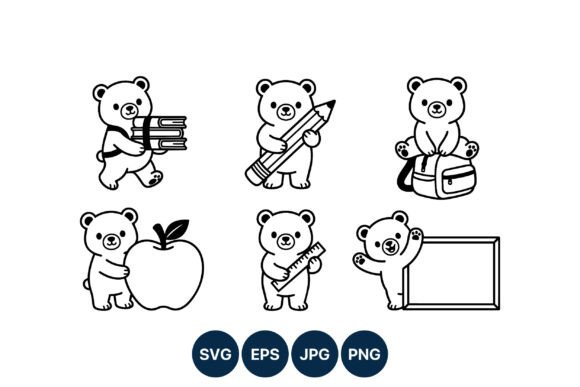
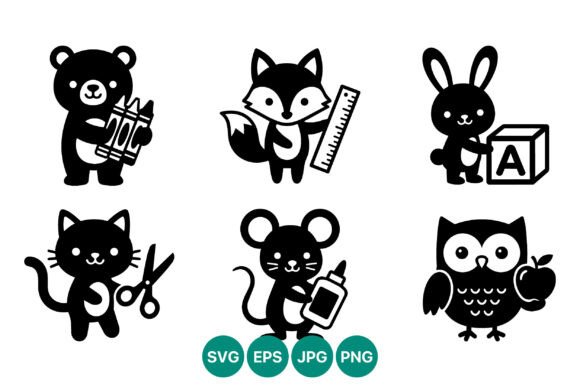
As a designer who spends half my life staring at digitized files and the other half pulling bobbins out of tangled messes, I have learned to look past the glossy preview images. When I first opened the Cute Animals with School Supplies Vector, my initial reaction was one of cautious optimism. We see countless "cute" designs flooding the market, but few hold up under the needle. This collection, featuring six distinct characters—a bear with crayons, a fox with a ruler, a rabbit with a block, a cat with scissors, a mouse with glue, and an owl with an apple—promises a charming aesthetic that fits perfectly into the back-to-school and nursery decor niches. But does it stitch as cleanly as it looks on screen?
First Impressions: Mood and Visual Personality
The immediate mood this set creates is playful yet organized. There is a innocence in the black and white vector art that translates well into embroidery because it relies on shape rather than complex shading. For embroidery designers, this is a crucial distinction. Complex gradients often require dense fill stitches that can puckers lightweight fabrics. Here, the reliance on clear outlines and recognizable symbols (like the apple or the ruler) suggests a design that prioritizes clarity. The visual personality is approachable, making it an ideal candidate for Illustrations intended for younger audiences or whimsical home goods. As Graphics, they are versatile, but their true test lies in how those vectors convert into thread paths.
Real-World Application: The Tote Bag Test
To truly evaluate a design, you must imagine it on a finished product. I recently considered using the fox with the ruler for a custom tote bag design aimed at teachers. The concept was simple: a canvas tote with the fox centered, surrounded by minimal text. In this scenario, the Cute Animals with School Supplies Vector shines because of its balanced composition. The fox’s tail and the ruler create a natural horizontal flow that sits well on the flat surface of a bag. Unlike vertical designs that can look stretched on wide hoops, these characters have a compact footprint.
However, when moving from a tote to sweatshirt embroidery, the dynamics change. I envisioned the bear with crayons on a child’s hoodie. Here, the bulk of the fabric matters. A hooded sweatshirt has more give and thickness than canvas. If the stitch density is too high, the design will feel stiff and uncomfortable against the skin. My advice is to check if the digitizer has used a combination of satins stitch for the outlines and lighter fill stitch patterns for any larger areas. If the entire animal is filled densely, it may not drape well on a garment meant for active play.
Navigating Fabric and Hoop Constraints
One of the most critical aspects of using any machine embroidery design is understanding its limitations regarding hoop size and fabric type. While these animals are cute, they contain small details—the eyes of the mouse, the teeth of the scissors, the pages of the book held by the owl. These elements are potential failure points if stitched on textured fabrics like terry cloth or waffle knit. The texture can swallow fine running stitch details, making the face look incomplete.
For baby embroidery projects, such as onesies or burp cloths, you must be particularly careful. Babies have sensitive skin, and parents wash these items frequently. If the Cute Animals with School Supplies Vector uses a heavy backing or excessive stabilizer to maintain shape, it could irritate the skin. I always recommend testing the design on scrap fabric first, specifically the same material you plan to use for the final handmade product. Check how the thread colors contrast against the fabric. Since the source art is black and white, you have creative freedom, but poor contrast on dark fabrics can make the design disappear unless you use a bright underlay or metallic thread accents.
Challenges with Curved Surfaces
Applying these designs to curved surfaces, like caps or hats, requires extra scrutiny. The rabbit with the block, for instance, has a square element that might distort if hooped incorrectly on a curved cap frame. Distortion is the enemy of professional-looking custom apparel. If you are an Etsy seller or run a small shop product line, consistency is key. A distorted owl looks amateurish. Ensure your stabilizer choice is robust enough to support the design without adding unnecessary bulk. Cut-away stabilizers are often better for garments that will be washed repeatedly, while tear-away might suffice for decorative pillows that see less wear.
Commercial Viability and Brand Consistency
For craft business owners, the appeal of this collection lies in its versatility. It allows for the creation of a cohesive product line. You can offer the cat with scissors for sewing enthusiasts, the owl with an apple for teachers, and the bear with crayons for toddlers. This thematic consistency helps build brand recognition. When customers see a specific style of embroidered patch or apron, they begin to associate that quality with your shop. However, before listing these as commercial embroidery assets, you must verify the licensing. Just because a file is labeled as a vector or graphic does not automatically grant commercial rights for physical goods or digital resale.
Furthermore, consider the perceived value. A well-stitched design elevates a simple tea towel into a premium personalized gift. The clarity of the lines in the Cute Animals with School Supplies Vector contributes to this perception. Messy jumps or loose threads detract from the cuteness. Therefore, reviewing the embroidery file for clean pathing is essential. If you are creating printable mockup images for your online store, ensure the digital representation matches the stitched reality. Misleading previews lead to returns and negative reviews.
Practical Designer Notes for Best Results
To get the most out of this design set, keep these practical steps in mind:
- Test Stitch First: Always run a test on similar fabric to check for registration issues, especially where the school supplies overlap the animals.
- Check Thread Contrast: Since the original art is black and white, experiment with monochromatic threads for a subtle look or vibrant primaries for a playful vibe.
- Inspect Small Details: Zoom in on the digitized file. Are the eyes too small? Will the glue stick detail hold up, or will it look like a blob?
- Verify Licensing: Confirm whether the license allows for selling finished physical items, which is crucial for holiday embroidery sales or boutique branding.
- Adjust Density: If your machine allows, slightly reduce fill density for stretchy fabrics to prevent puckering.
In conclusion, the Cute Animals with School Supplies Vector offers a solid foundation for various embroidery project types. Its strength lies in its clear, recognizable shapes and emotional appeal. However, its success depends entirely on the executor’s attention to detail regarding fabric choice, stabilization, and stitch quality. For the creative entrepreneurs and makers willing to put in the prep work, this collection can become a staple in their portfolio of design assets, driving engagement and sales through charming, high-quality finished products.